logos_stacked.png)
At St Josephs we follow the phonics scheme 'Supersonic Phonics Friends' - an accredited scheme from the government.
This is a scheme that starts within our Preschool- where children have the opportunity to develop key skills in listening, saying sounds, hearing sounds, alliteration and rhyme.
It progresses through the school and currently runs through to our Year 2 children.
It is a highly engaging programme that allows children to engage with phonic characters, who support them in developing key skills in phonics - focusing on reading, writing and spelling!
Alongside its characters it has engaging rhyming phrases, which encourage children in their learning. As children progress through the scheme, they are supported by matching resources, allowing them to become secure and confident in using resources to help them. These resources and phrases are used throughout school to ensure consistency.
The scheme follows a specific sound order, starting with 'Firm Foundations 1' in preschool, 'Basics 2 & 3' in Reception, and 'Basics 4 & 5 in Year 1'. We assess the children against the scheme to dictate what the children need to be taught next.
We identify children who need additional support, and those children receive regular additional support to allow them to 'keep up', not 'catch up'.
The children receive phonics books to read at home. These are matched to what they have been learning, and ensure that they only 'visit' sounds they have experienced through their taught phonics sessions.
Phonics: How to pronounce pure sounds | Oxford Owl
The way that children pronounce the sounds it vitally important. Ensuring that all children, staff, and parents pronounce the sounds in the same way, supports learning.
Additional information
Intent
St Josephs Catholic Primary School- Phonics
Intent
At St Joseph’s Catholic Primary School we want to equip all our pupils with a secure phonic knowledge that enables them to read and write successfully. Children will be able to apply their understanding of letters and sounds to decode a range of words which in turn will allow them to read books that are closely matched to their phonic knowledge. When writing, children will be able to make phonically plausible attempts at unfamiliar words, enabling them to write with an appropriate level of independence for their age. They will also be able to use their phonic knowledge to correctly apply a range of spelling rules to words.
Implementation
In EYFS and KS1, a systematic and rigorous approach to phonics will be applied through the delivery of the Supersonic Phonics Friends Scheme. Robust assessments will be used to ensure that children are making at least expected progress and teaching is delivered and guided by what our assessments inform us. Where children are not making expected progress, 1:1 support sessions will be put in place to address this. All children are considered, with vulnerable children, or those needing support, placed on the edges of the carpet where they have consistent, regular support from support staff throughout the phonics session. Staff delivering the phonics scheme will have had access to quality training materials and regular support from Senior Management. Children will take home familiar and unfamiliar books that are closely matched to their phonic knowledge. Across school, all classrooms will use the same resources, vocabulary, rhymes, fictional characters and supporting materials and actions, to ensure consistency as the children move through the school.
Children also have a heavy focus on tricky words. This is taught daily within the classroom. As children move in to KS1 they are taught spelling patterns to ensure they have a wide variety of sounds and knowledge to spell words correctly.
In Reception, writing and spelling has a key focus on hearing and recording sounds, and therefore children practise on whiteboards. Throughout the day children have additional opportunities to practise writing. As they move into KS1, they record in books, to promote handwriting alongside phonics.
Impact
At St Josephs we want children to feel confident in using their phonic knowledge and the strategies that they have been taught to read words. This helps them to access a range of material and, in turn, fosters a love of reading. By taking home books that are closely matched to their phonic knowledge, children can celebrate reading success with their parents and carers which will give them the confidence and motivation to read regularly. This will have a positive impact on the progress that they make. Children will be able to make phonically plausibly attempts at spelling words and therefore communicate their ideas in writing across a range of subjects and for a range of purposes both in and out of school. Based on their phonic knowledge, children can make good spelling choices and spell many words correctly. In short, we aspire for our pupils to:
• read at an age-appropriate level with fluency which enables them to access the broader curriculum
.• develop a life-long love of reading where they read widely and often, with fluency and comprehension.
• Achieve well at EYFS, Key Stage 1 and Key Stage 2 assessment points.
• Have the required phonics skills to pass Year 1 phonic screening check on the first attempt.
Characters and phrases
Progression
Parental support
Phonics Training for Parents - Reception
Mr Brett has created some training videos to support parents with phonics at home.
Phonics Training for Parents - Reception
Year 1 Parent Support Videos
Miss Evans has made some videos for parents to show how to support your child with phonics in Year 1.
Catholic Social Teaching Curriculum Link: Stewardship of God's Creation
Glossary of SPAG Terms - English
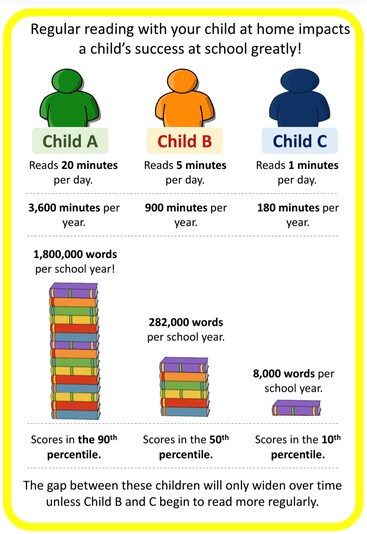
We are proud that we weave reading for pleasure through our school offer and devote time fostering a love of reading.
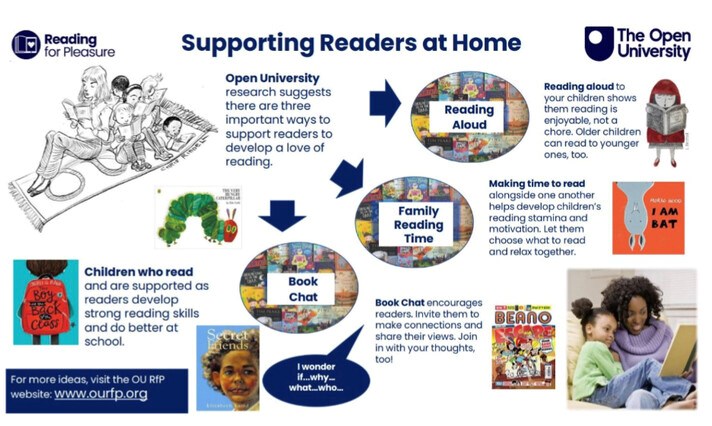
To support at home, please follow the link to the Open University Supporting Reading at Home website: